







MetricsCube has moved into its next chapter that crowns a long-running transformation of WHMCS reporting inside the platform. But before we get there, it’s worth rewinding a few months to a particularly busy period in our platform’s story.
First came the modernized website, followed by refreshed pricing plans that made advanced WHMCS analytics considerably more approachable for smaller businesses. A lot of that came down to the new Starter plan, which lowered the entry point for those who had previously treated this level of reporting as something reserved for later stages of growth. Alongside that, our collaboration with ModulesGarden has grown even stronger, opening the door for a more connected and long-term vision for the platform.
But while these changes shaped the experience around MetricsCube, another transformation had already been happening much deeper inside. Last year marked the beginning of one of the biggest updates in MetricsCube’s history: a complete rebuild of over 90% of all reports available across the platform. This release completes that transformation.
With the fully rebuilt Performance Report now restored, MetricsCube has officially reached 100% rewritten reports across the entire platform. And fittingly, the report left until the very end was also the one that required the most attention. Not because it was visually the most complicated report in the platform, but because it serves a fundamentally different role than the rest of the reporting ecosystem.
Behind the final piece of the grand rebuild
Most reports inside MetricsCube are intentionally specialized. Billing reports explain financial streams. Churn reports expose retention patterns. Service and subscription reports help track business growth. Support reports reveal workload trends and the pressure building across everyday operations.
That level of specialization exists for a reason because mature WHMCS companies need precision above all else. But business maturity changes the type of questions they eventually need answers to. Looking at metrics separately only works for so long before teams start spending more time assembling fragmented context than actually interpreting it.
The broader business perspective has always been the real purpose behind Performance Report. It creates a centralized analytical layer where month-to-month (or year-to-year) movement across the company can finally be observed together instead of separately. Not as isolated statistics spread across multiple reporting sections, but as one coherent view where trends start interacting with one another in ways that resemble the actual dynamics inside hosting businesses.
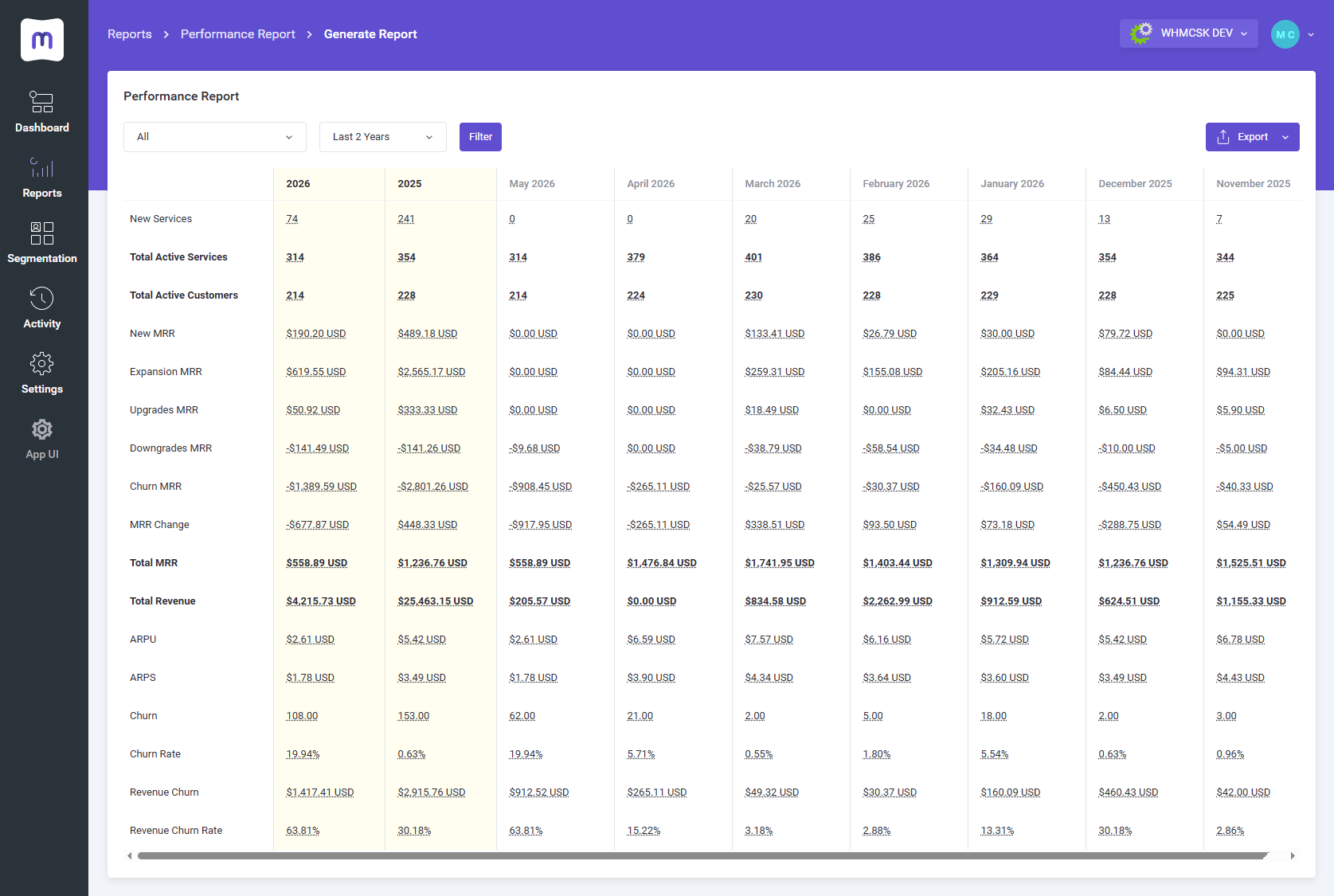
That was also the reason this report required its own release cycle. Rebuilding individual reports is mostly about improving analytical precision within individual areas of the business. Rebuilding the report responsible for connecting the rest of the analytical ecosystem together requires a very different level of consistency underneath the platform itself.
The rebuilt Performance Report now works within the same modern reporting architecture introduced across the rest of MetricsCube during last year’s transformation. The difference is especially noticeable when:
- Moving across the six report sections,
- Switching between 2-year and 5-year timeframes, or
- Drilling deeper into metrics that lead directly into the relevant pre-filtered reports inside MetricsCube.
Improved experience across every layer of reporting
Beyond completing the rebuild, this release also introduces a dedicated caching layer for reports inside Billing, Subscriptions, Churn, Renewals, Services, Domains, Customers, Support, and Other. In practice, reports across those sections now load significantly faster during standard workflows whenever additional filters are not applied.
Additionally:
- My Billing section now provides clearer feedback during troubleshooting.
- Date selection is much smoother during longer reporting sessions.
- Dashboard widgets are simply easier to organize day to day.
The rebuild is complete. The platform keeps moving!
The WHMCS ecosystem continues evolving because the businesses operating inside it continue evolving too. Working models became more layered, customer behavior became less predictable, and analytics itself stopped being something companies check occasionally at the end of the month. For many teams, it became part of everyday decision-making a long time ago.
And for companies only beginning to move beyond basic WHMCS reporting, the combination of 100% rebuilt reports and the new Starter plan creates the most approachable entry point MetricsCube has offered so far into advanced business analytics.
