







Over time MetricsCube matured into a serious analytics environment for WHMCS businesses. Companies began relying on it not only for quick reporting, but above all for understanding patterns in revenue, customer behaviour and operational performance. The analytical depth was already there. What needed an update was the way that depth was presented.
That is why today marks the start of a new chapter for MetricsCube. Our platform now arrives with a redesigned website, a thoroughly modernized pricing structure, a clearer product offering, and a deeper collaboration with ModulesGarden that strengthens the entire analytics ecosystem around WHMCS.
Nothing about the core promise of MetricsCube has changed. The platform still focuses on turning complex WHMCS data into meaningful business insight. What has changed is how easy it is to understand, access, and start using it.
A website that lets the platform speak clearly
The most visible part of this new chapter is the redesigned MetricsCube website.
The previous site did its job well enough when the platform was still growing into its role, but as the product matured, the page began to feel slightly out of step with expectations of modern users. The new website brings the experience back into balance.
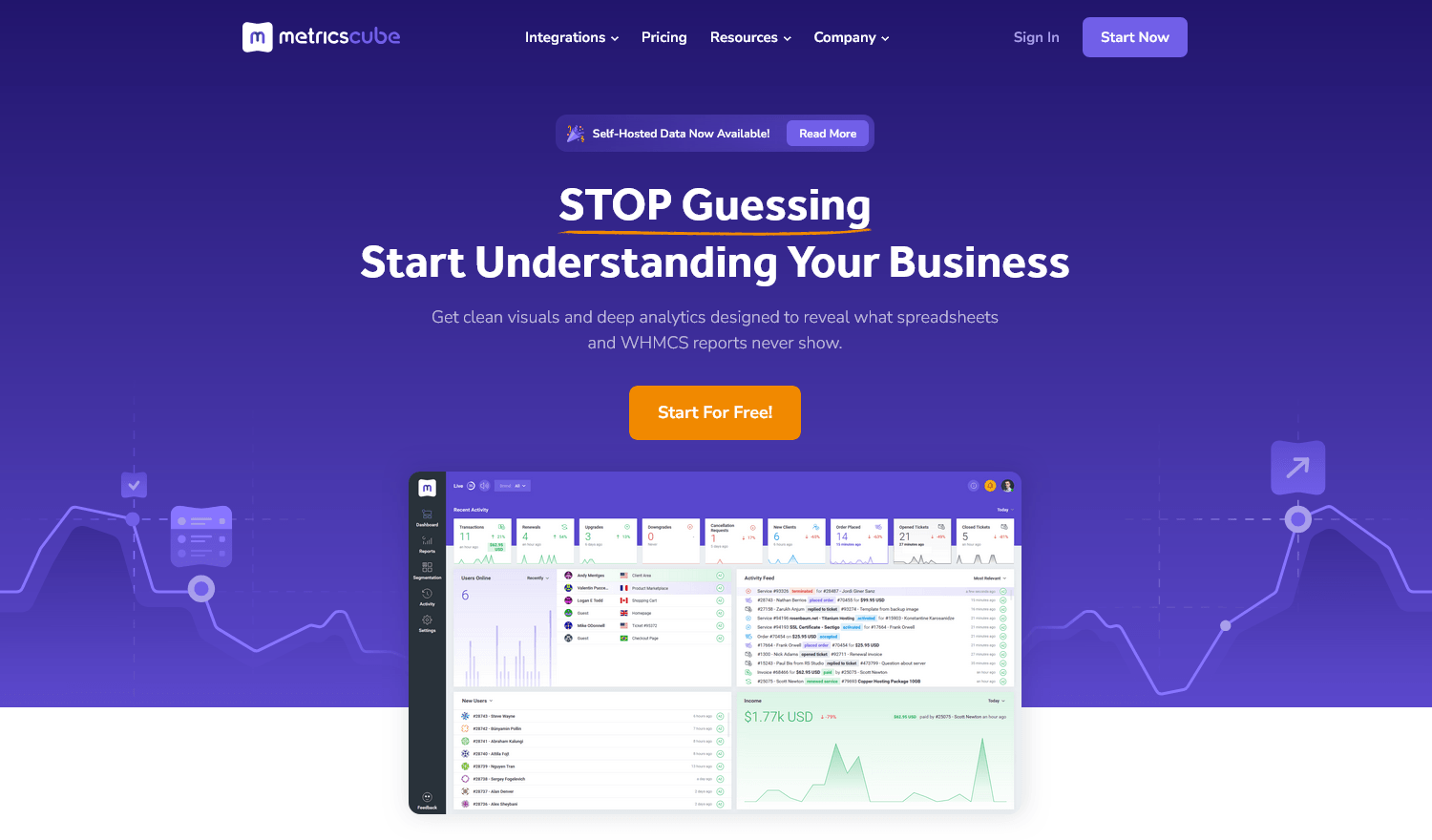
The entire website has been refreshed with a more attractive and engaging look, while keeping the user journey smooth and easy to navigate. Visitors can move through the site in a way that gradually reveals what MetricsCube does and why it matters this much for WHMCS-based businesses. Information is easier to find, explanations are clearer, and the overall experience is simply more intuitive. Instead of digging through layers of content, visitors can now grasp the platform’s value within minutes.
Pricing that speaks the same language as its users
While the new website is the first thing visitors notice, just as much attention went into refreshing the pricing structure. As MetricsCube matured, the way the platform was packaged and presented needed to evolve as well. Different companies approach analytics with very different levels of complexity, and the pricing model needed to reflect that range more clearly.
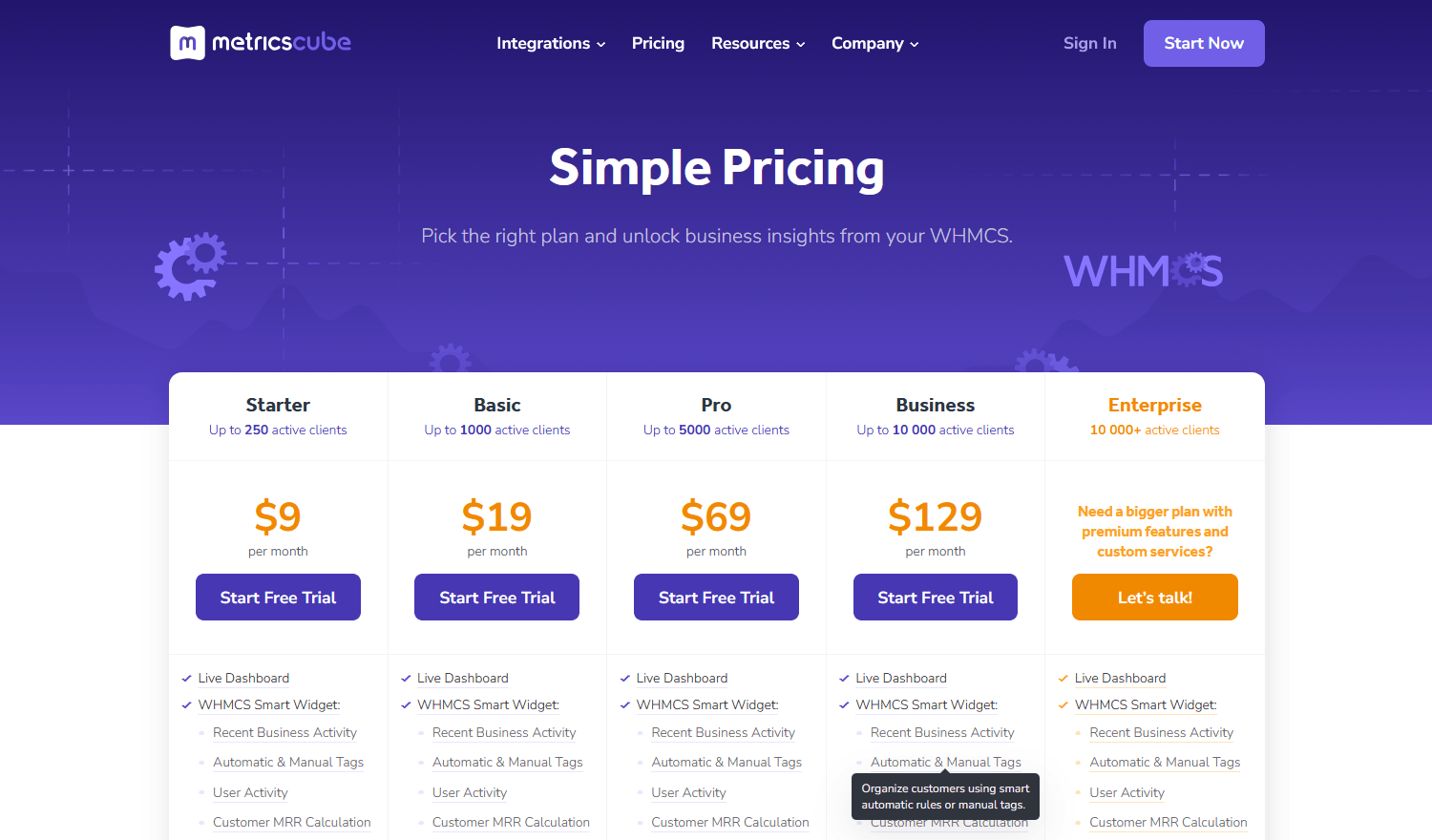
A new Starter plan now introduces a lower entry point for companies that want to begin working with business analytics without committing to advanced data strategies immediately. It offers a practical way to step into the platform and gradually expand the scope of analytics as operational needs grow.
At the same time, the existing tiers have been refined and repositioned to better reflect the scale of organisations they serve. The plans previously known as Business and Professional have received updated names and clearer descriptions that make it easier to recognise where each option fits.
One of the most noticeable improvements appears on the pricing page itself. Each plan now includes a more detailed feature list supported by tooltips that explain what each capability actually means in everyday use. Instead of scanning through a list of technical labels and trying to interpret them, visitors can now understand the scope of each plan almost immediately.
Self-hosted data for teams that prefer to stay private
Another important addition appears within the Business and Enterprise plans, where from now on Self-Hosted Data Connection takes its place as an officially available option.
Many companies run WHMCS inside environments where incoming connections are restricted or avoided altogether, whether due to strict firewall policies or because the billing system operates within a private infrastructure isolated from external services.
Self-Hosted Data Connection addresses this by reversing the direction of communication. Instead of MetricsCube initiating the connection, the customer’s own server securely sends the data to the analytics platform, which often fits internal infrastructure policies far better.
This approach also provides an important operational advantage. Because the data flow originates within the organization’s own environment, teams retain greater control over governance and compliance requirements, including frameworks such as GDPR.
Want to explore this approach in more detail? The below guide walks through it step by step:
Self-Hosted Data Connection – Let Your Metrics Travel on Your Terms
A deeper collaboration with ModulesGarden
Another important development has also been taking place behind the scenes.
MetricsCube has significantly expanded its collaboration with ModulesGarden, bringing their specialists more deeply into the development and integration process. This closer partnership strengthens both the technical foundation of the platform and the long-term stability of its WHMCS ecosystem.

The cooperation also extends beyond engineering. Both teams are exploring new ways to expand the offering around MetricsCube, opening the door to additional opportunities and special deals. So whether you are already part of the ModulesGarden community or only just discovering it, their Marketplace is well worth keeping an eye on!
Faster path from installation to active analytics
One of the most visible results of this deeper collaboration is the freshly updated MetricsCube Connector For WHMCS, now fully compatible with the next-gen WHMCS 9.X.
A streamlined one-click onboarding flow now handles the account setup and integration automatically, allowing businesses to activate analytics in a matter of minutes instead of navigating through a multi-step configuration. What’s more, access to the reports can now be initiated directly from within WHMCS, making the entire experience far more integrated with the billing system.
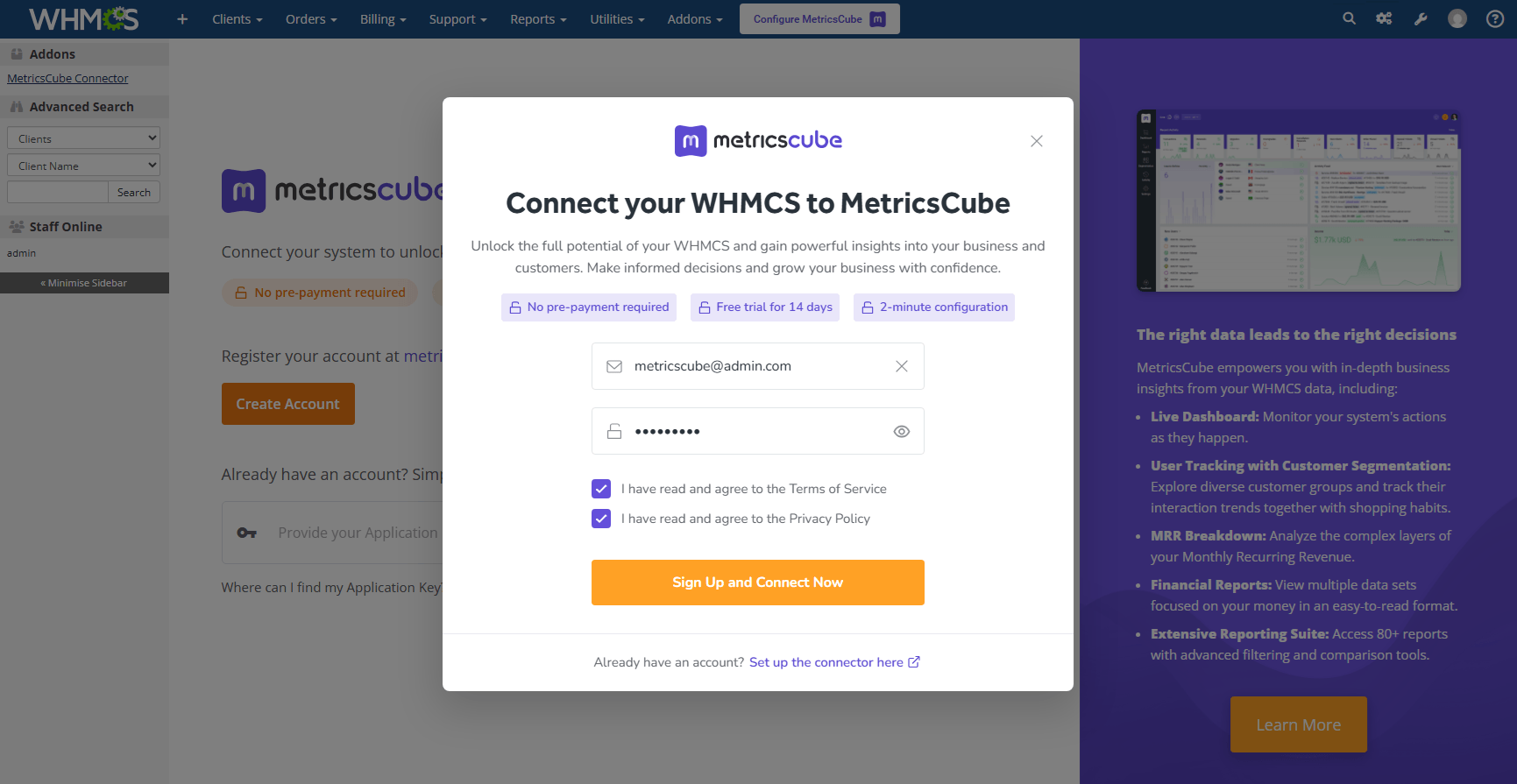
The module interface itself has also been refreshed to provide a cleaner and more modern configuration process, while deeper compatibility with ModulesGarden WHMCS modules helps create a more unified analytics ecosystem.
Into the next chapter and beyond
MetricsCube is entering a stage where the platform is not only becoming technically stronger, but also significantly easier to approach for teams working with very different levels of analytics maturity.
By making the platform easier to understand, easier to access, and easier to integrate into existing environments, MetricsCube moves closer to the role analytics platforms are increasingly expected to play: not just a reporting layer, but a natural part of how companies observe and understand their business.
In other words, the platform remains every bit as powerful as you have come to expect. What has changed is how naturally it now fits into the daily reality of the businesses that rely on it.
